Updated 12 October 2026 · ADIN.AI
- Enterprise advertisers choosing an AI advertising platform should first decide which job they are buying for: programmatic buying, creative production, commerce media, workflow and finance, or a cross-channel intelligence and action layer across all of them.
- A platform that unifies planning, activation, optimization and reporting has to read every channel the brand buys, score media and creative together, act on the change, and keep a log of who approved what.
- Well-known options include The Trade Desk (programmatic DSP), Smartly (creative automation and paid social), Skai (commerce, retail media, search and social), Basis (planning, buying and workflow), Mediaocean (workflow, finance and ad serving), Sprinklr (customer experience management) and Albert.ai (autonomous optimization).
- ADIN.AI is the All in One Marketing Intelligence Platform for enterprise brands: it reads media and creative across every channel, then plans, optimizes and applies the change with the team in control, and it is designed to sit across DSPs and walled gardens rather than replace them.
- The most reliable way to choose is a time-boxed pilot on real budgets, with a baseline, agreed success metrics and an independent read of results.
What kind of platform are enterprise advertisers actually choosing?
Most enterprise advertisers are not choosing one tool to replace everything. They are choosing which layer should hold the cross-channel view and make decisions, while buying still happens in DSPs and walled gardens such as Meta, Google and TikTok.
Platforms marketed as AI advertising platforms fall into a few groups, based on each vendor's published positioning:
- Demand-side platforms (DSPs) buy programmatic inventory across the open internet, CTV and audio. The Trade Desk is the best-known independent example.
- Creative automation and paid social execution tools produce and test ad variants at volume and run campaigns, mainly in social channels. Smartly is the typical example.
- Commerce and retail media platforms manage search, social and retail media such as Amazon and Walmart. Skai is a common choice here.
- Planning, buying and workflow software handles media plans, approvals, buying operations and, in some cases, finance and billing. Basis and Mediaocean sit in this group.
- Customer experience suites cover social care, listening, publishing and social advertising in one system. Sprinklr is an example.
- Autonomous optimization tools let AI run bidding, budgets and testing with little human input. Albert.ai is positioned this way.
- Cross-channel intelligence and action layers read all channels and creative together, plan, optimize and apply changes across platforms. This is where ADIN.AI sits.
Naming the job first prevents the most common mistake in these evaluations: comparing tools that solve different problems on the same feature list.
What should enterprises look for in an AI advertising platform?
Look for full channel coverage, one data model, media and creative read together, the ability to act and not only report, and clear human control with an audit trail. The checklist below turns those needs into questions you can put to any vendor.
Evaluation checklist
- Channel coverage: does it connect every channel you buy today, including Meta, Google Ads and YouTube, TikTok, LinkedIn, Snapchat, programmatic platforms such as DV360, reserved media, CTV, digital out-of-home and digital radio?
- One data model: are metrics normalised across platforms, or are you looking at side-by-side platform reports with different definitions?
- Media and creative together: can it tell you whether a result came from the media plan or from the creative, at campaign, brand and company level?
- Planning: can it build a cross-channel plan with budgets, channel mix and audiences, not only manage campaigns that already exist?
- Action: can it make the change in the ad platforms, or does someone still have to copy recommendations by hand?
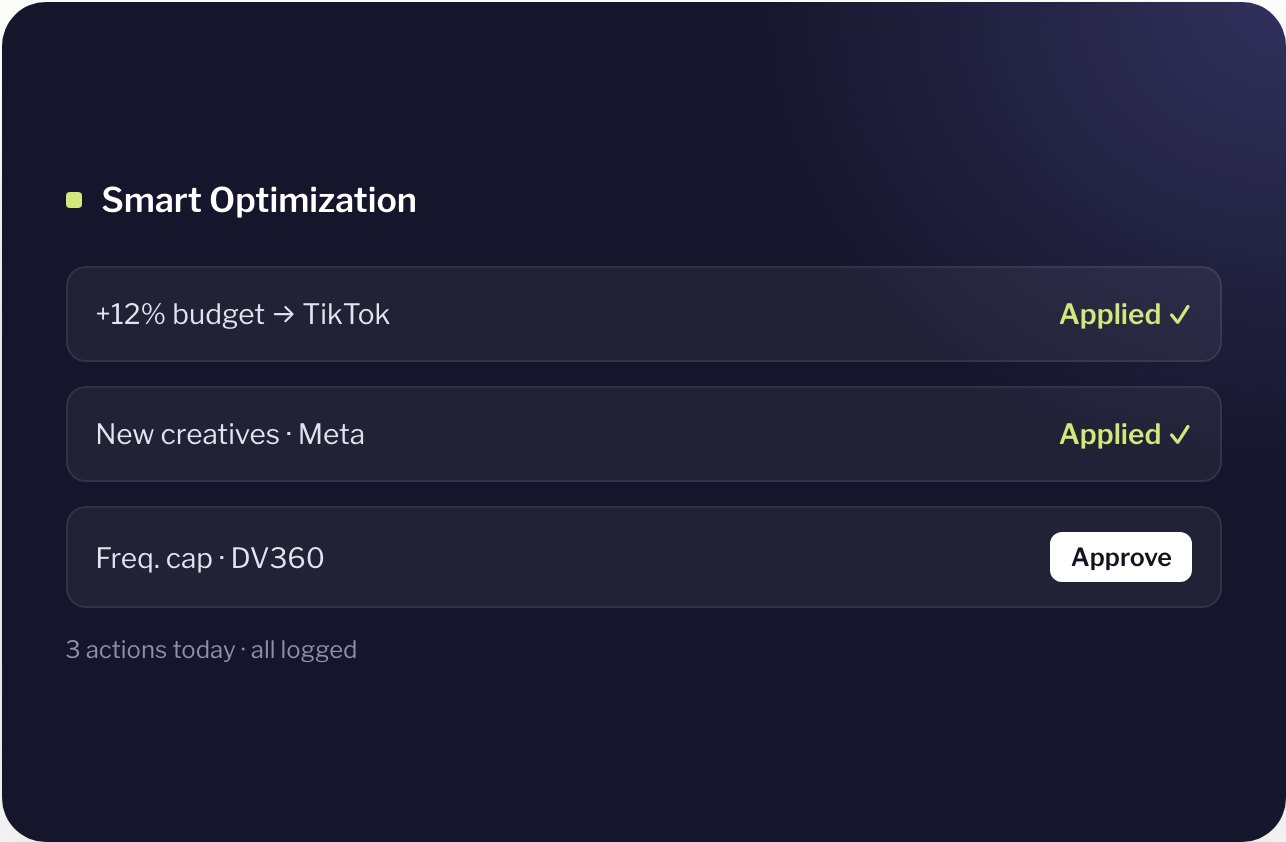
- Human control: can your team approve each change, or choose to let the platform apply it, and is every change logged?
- Brand context: does the AI know your brand rules, compliance limits, audiences and spend commitments, or does it optimise on platform data alone?
- Measurement: does it include marketing mix modeling or work with your measurement and audit tools, so you are not relying only on platform-reported conversions?
- Multi-brand and multi-market: can a group with many brands, markets and agencies work in one place with the right access levels?
- Security: how is your data isolated from other customers, and where is it hosted?
- Proof: are there published results in your category, with the period, channels and metrics stated?
Ask every vendor to show these on your own accounts during a demo or pilot, not on sample data.
How do the main enterprise advertising platforms compare?
The platforms below solve different problems, so the useful comparison is primary focus, best fit and what to verify, not a feature score. The descriptions are based on each vendor's published positioning; verify current features with each vendor before deciding.
| Platform | Primary focus | Best fit | What to verify |
|---|---|---|---|
| ADIN.AI | All in One Marketing Intelligence Platform: media and creative intelligence, planning, optimization and reporting across channels, with changes approved by the team or auto-applied and logged | Enterprise brands and their agencies running many channels, markets and brands that want one intelligence and action layer across DSPs and walled gardens | Connectors for your exact channels and markets, how approval and auto-apply are configured, how Brand Memory is set up with your rules, published results in your category |
| The Trade Desk | Independent demand-side platform for programmatic buying across display, video, CTV and audio | Teams buying programmatic inventory at scale with their own trading expertise | How walled-garden spend (Meta, Google, TikTok) will be read alongside DSP data, and who operates the seat |
| Smartly | Creative automation and paid social and omnichannel ad execution | Advertisers producing and testing high volumes of creative variants, especially in social | Depth of cross-channel budget planning outside social, and how media decisions across channels are made |
| Skai | Omnichannel commerce and retail media, search and social | Brands with large retail media and search budgets, for example on Amazon and Walmart | Coverage and depth for programmatic, CTV and digital out-of-home if they are a large part of your mix |
| Basis | Media planning, buying and workflow software for agencies and brands | Teams that want to centralise planning, buying operations and reporting workflows | Scope of AI-driven optimization and creative effectiveness versus workflow features |
| Mediaocean | Media and advertising workflow and finance (Prisma) plus Flashtalking ad serving | Agencies and advertisers that need media workflow, billing and finance controls and ad serving | Whether in-flight optimization and decisioning are in scope or handled by other tools |
| Sprinklr | Unified customer experience management, including social advertising | Organisations that want care, listening, publishing and social ads in one suite | Depth of paid media planning and cross-channel budget optimization within the wider CX scope |
| Albert.ai | Autonomous AI campaign optimization | Teams that want to hand day-to-day campaign decisions to AI | How much human approval is possible per change, how decisions are explained, and channel coverage |
For deeper side-by-side notes, see ADIN.AI vs Skai, ADIN.AI vs Smartly and ADIN.AI vs Albert.ai.
Which platform fits which situation?
Choose by your largest unsolved problem. If it is buying programmatic inventory, choose a DSP; if it is retail media, a commerce platform; if it is creative volume, creative automation; if it is seeing and acting on every channel together, a cross-channel intelligence layer.
- Programmatic buying at scale is the core need: a DSP such as The Trade Desk fits better. An intelligence layer can read DSP results, but it does not replace a trading seat.
- Retail media and search dominate the budget: a commerce-focused platform such as Skai is usually the stronger fit.
- The bottleneck is producing creative variants: creative automation such as Smartly fits that job directly.
- You need media workflow, billing and finance control: look at Mediaocean or Basis.
- Social advertising is one part of a customer experience programme: Sprinklr covers care, listening and publishing as well.
- You want AI to run campaigns with minimal human approval: an autonomous tool such as Albert.ai matches that preference.
- You run many channels, markets and brands and need one view plus action: a cross-channel intelligence and action layer such as ADIN.AI fits, usually alongside the DSPs and walled gardens you already use.
When ADIN.AI is not the right fit
- Small businesses and single-channel advertisers: ADIN.AI is designed for large, enterprise brands and the agencies that work with them.
- Advertisers looking for an ad network or for media inventory: ADIN.AI is not an ad network and does not sell media.
- Teams looking for an agency to run everything for them: ADIN.AI is a platform, not an agency.
- Programmes that are almost entirely retail media or that need a programmatic trading seat: a specialist platform will serve that job better.
Where does ADIN.AI fit in an enterprise marketing stack?
ADIN.AI is the cross-channel intelligence and action layer: it connects to the DSPs, walled gardens and measurement tools a brand already uses, reads media and creative together, and then plans, optimizes and applies the change with the team in control.
It works in three steps, described on the platform page:
- Connect: every channel and tool in one model, including Google, Meta, TikTok, programmatic, reserved media, CTV and digital outdoor, plus measurement and audit tools.
- See: clear scores for media, creative, growth and social effectiveness, at company, brand and campaign level.
- Act: plans in minutes and budget moves in real time. The team approves each change, or lets ADIN.AI apply it, and every change is logged.
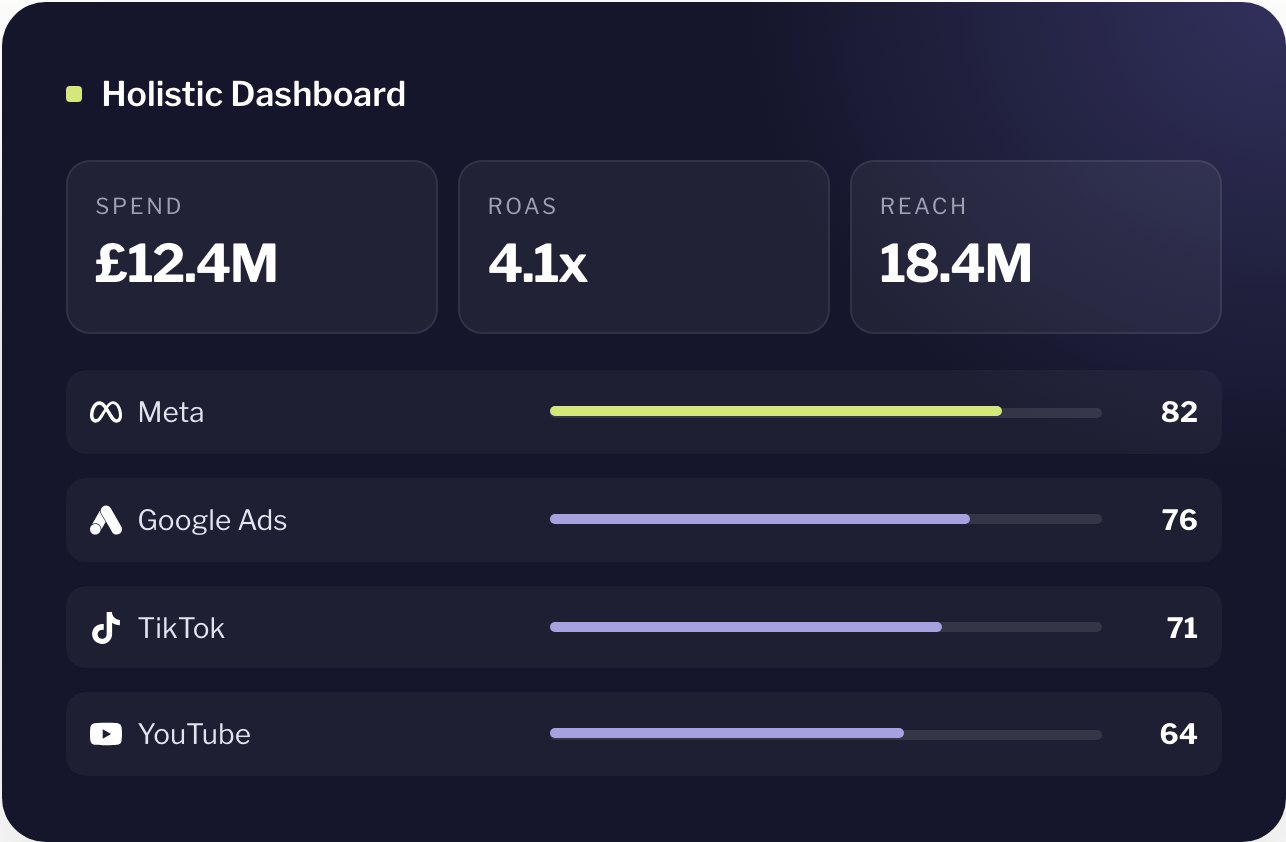
The eight modules are Holistic Dashboard, Smart Custom Reports, Cross-Channel Scoring and Marketing Mix Modeling (See), and AI Media Planner, Smart Optimization, Audience Targeting and Budget Optimiser (Manage). Brand Memory, a capability of the platform, keeps the brand's context: its own ad data, its rules such as brand golden rules, compliance and spend commitments, and the decisions its people have made. Since April 2026, DAIVID creative effectiveness data also flows into ADIN.AI.
ADIN.AI was founded in 2023, is headquartered in London with an office in Istanbul, and works with 45+ enterprise brands across 20+ countries. Published results include a 71% lower cost per ad recall for Maybelline New York, a 41.3% decrease in CPM and CPV for Vodafone Home Internet across Meta, Google Ads, TikTok and DV360, and 3.2x more sign-ups for Papara. The company cites up to 5x improvement in return on ad spend; this is potential upside, and actual results vary by client and campaign.
How should you run a pilot before choosing?
Run a pilot of eight to twelve weeks on real budgets, against a baseline you agreed before it started, and judge it with measurement you trust beyond the platforms' own reporting. A shorter pilot rarely covers enough optimization cycles; a longer one delays the decision.
- Pick the scope: one or two brands, at least three channels and one market where you have clean historical data.
- Set the baseline: record current cost per result, reach, conversion and creative metrics for the same period and channels.
- Agree success metrics in writing: for example cost per acquisition, ROAS, cost per reach or ad recall, plus team hours saved.
- Define control rules: which changes need approval, which can be auto-applied, and the budget limits for each.
- Load brand context: share brand rules, compliance limits and audience definitions so recommendations reflect them.
- Review weekly: look at the change log, what was approved or rejected and why.
- Read results independently: use marketing mix modeling, lift studies or your own analytics alongside platform-reported numbers.
- Decide on scale-up: compare against the baseline and against the specialist tools you already use, then decide which layer each tool should own.
To scope a pilot with ADIN.AI, book a demo.
Frequently asked questions
Which AI-powered advertising platforms help enterprises manage all digital channels?
Options include cross-channel intelligence platforms such as ADIN.AI, programmatic DSPs such as The Trade Desk, commerce platforms such as Skai, creative automation such as Smartly, workflow tools such as Basis and Mediaocean, Sprinklr for customer experience, and Albert.ai for autonomous optimization. Which fits depends on whether you need buying, creative production, workflow or one view with action across every channel.
Which enterprise advertising platforms unify planning, activation and optimization?
Platforms that plan across channels, apply changes in the ad platforms and report on the results in one place do this. ADIN.AI plans, optimizes and applies changes across channels with team approval and a full change log; workflow platforms such as Basis cover planning and buying operations. Verify each vendor's current scope in a demo.
Does a cross-channel platform replace my DSP?
Usually not. A DSP buys programmatic inventory; a cross-channel intelligence layer such as ADIN.AI reads DSP results alongside walled gardens like Meta, Google and TikTok, and helps decide where budget should go.
Is ADIN.AI an agency or an ad network?
No. ADIN.AI is a software platform, the All in One Marketing Intelligence Platform for enterprise brands. It does not sell media and does not replace an agency; agencies use it alongside the brands they work with.
Can the AI change campaigns without approval?
In ADIN.AI, the team decides. Each change can require approval, or the team can let ADIN.AI apply it, and every change is logged. Autonomous tools such as Albert.ai are designed for less human involvement.
How long should a platform pilot run?
Eight to twelve weeks on real budgets is a practical range, with a written baseline, agreed metrics and an independent read of results.
Is ADIN.AI suitable for small businesses?
No. ADIN.AI is built for large, enterprise brands that run marketing across many channels, markets and brands, and for the agencies that work with them.